
It’s Still Your Turn
Your partner may be doing the move, but you still have something to practice.
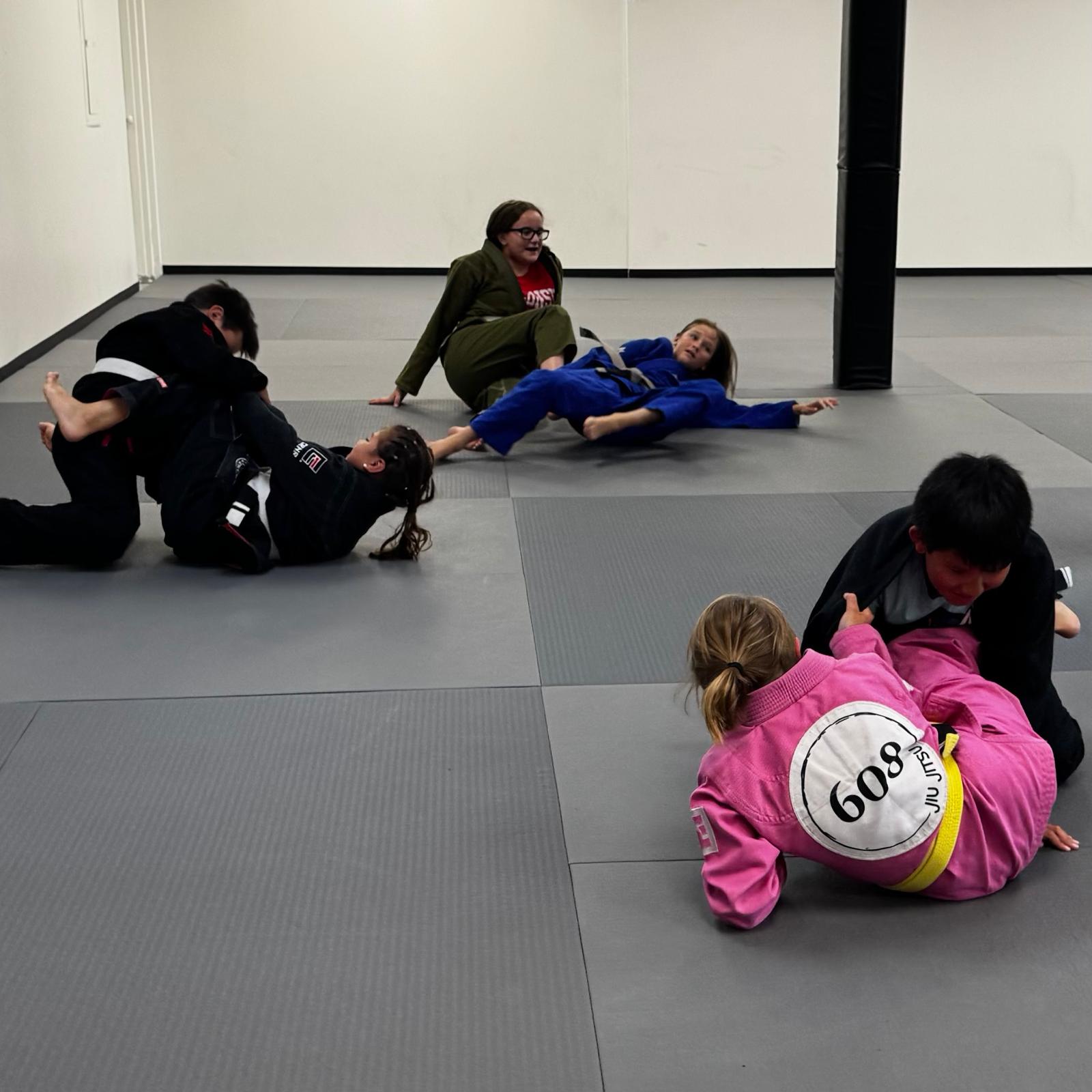
During drilling, one person practices the technique while the other practices how to respond, stay safe, and give useful resistance. Both people are learning.
When Coach says, “Switch,” it sounds like one person’s turn has ended and the other person’s turn has begun.
That is true for the technique.
It is not quite true for the practice.
One person may be practicing an escape while their partner holds the position. One person may be practicing a sweep while their partner tries to keep their balance.
Both people have a job.
Imagine you are practicing an escape.
Your partner could go completely limp and fall over before you finish the technique.
That would make the escape easy, but it would not give you much to practice.
Your partner could also use all of their strength to stop you.
Now the escape might be impossible to practice. Instead of working through the steps Coach showed, you may have to do something completely different just to move.
Your partner became a noodle in the first example.
In the second, they became a brick wall.
A useful training partner is somewhere in between.
They hold the position without squeezing as hard as they can. They keep their balance without making it impossible to move them. They respond to the technique without doing the work for you.
That gives you a problem you can actually practice solving.
Resistance is how much your partner tries to prevent a technique from working.
Sometimes Coach may ask your partner to give very little resistance. This gives you time to learn where your hands and feet belong.
Later, Coach may ask for a little more. Now you have to perform the same technique while your partner moves and reacts.
Eventually, you may try the technique during sparring, when your partner is doing everything they safely can to stop it.
All three kinds of practice are useful.
The important part is knowing which one you are supposed to be doing.
Try This in Class
The next time your partner is practicing a technique, remember that you still have a job:
- Begin in the correct position.
- Keep your body active instead of going limp.
- Respond naturally when your partner moves you.
- Give the amount of resistance Coach asks for.
- Do not turn the repetition into a contest.
If you are unsure, you can always ask your partner, “Do you want a little more resistance?”
You can also ask Coach what your job should be during the technique.
It can be fun to be the person performing the move.
It can be harder to notice what you are learning when you are the person receiving it.
You are learning how the technique feels. You are learning how your body naturally responds. You are learning how to give your partner a useful problem without making the repetition unsafe.
Those are jiu jitsu skills too.
You do not have to be the person performing the move to get better.
Sometimes your practice is the technique.
Sometimes your practice is the problem.
Either way, it is still your turn.
Parent Note
Joshua is the owner and head coach at 608 Jiu Jitsu in Cross Plains, Wisconsin. He writes about learning, problem solving, and becoming a better training partner through jiu jitsu.