
Let’s See Where This Goes
Giving an exchange a little more room can reveal something new for both training partners.
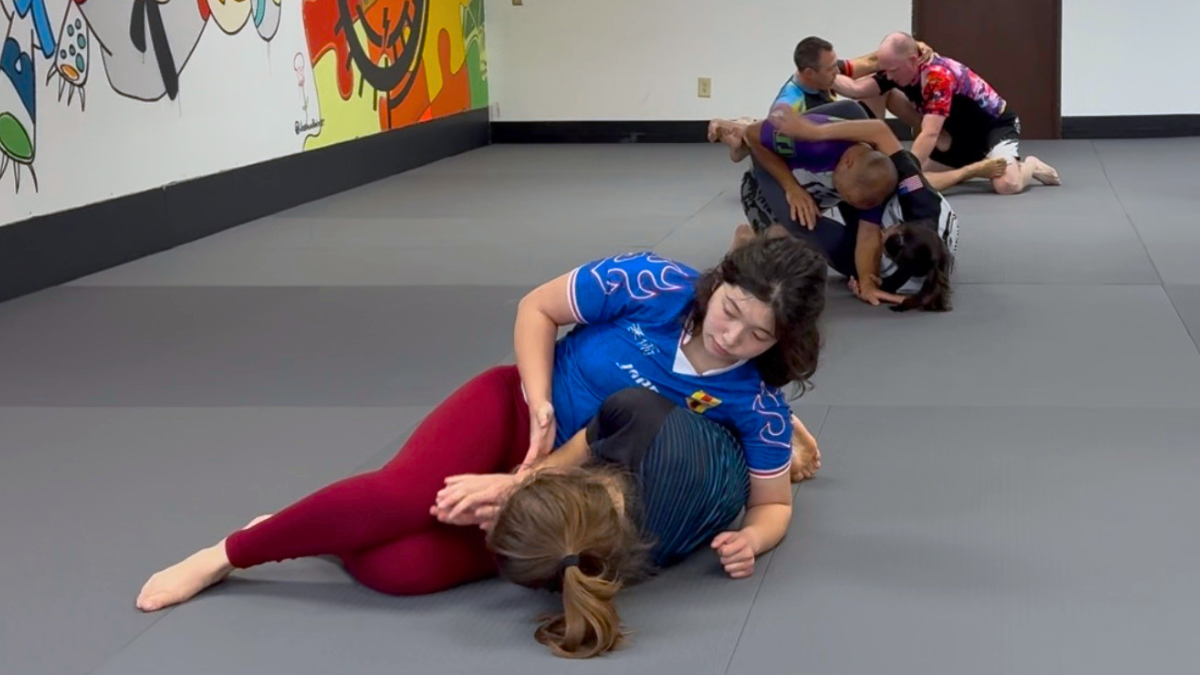
Giving a less experienced partner time to answer one defense can create a real challenge for both people. They still have to earn their progress, and we get to work on what happens next.
When I first opened my school, unless I could get to my coach's school, most of my training partners were my students. And most of them were white belts. Some had previous experience, but I was trying to improve my own jiu jitsu while working with people who had considerably less training than I did.
Of course, I only ever taught the absolute best techniques. I still do.
But watching enthusiastic white belts sparring with each other does not always reveal impeccable technique. Sometimes it looks like two apes fighting over the last banana, with some jiu jitsu sprinkled in every now and again.
I had students to teach and improvements to make in my own game. And hoping that their white belt training partners were helping to improve their skill versus revert them into Cro-Magnons wasn't looking promising. I needed ways for us to challenge each other with the combined experience we had.
I had options.
One approach was to give them more room to work into positions, then try to get myself out before things became worse.
Sometimes things became worse.
Training like that wasn’t especially good for inflating my ego. But it helped me see what I needed to work on.
The Road Less Traveled
Let’s look at a round with a less experienced partner who is trying to pass our guard.
We recognize the grips. We know the likely directions they could move. We may already have a familiar response that will put them back where they started.
That can challenge them. Keeping our guard while someone tries to pass can also be an enjoyable way to spend a round. Wanting to do our best jiu jitsu because we enjoy doing our best is reason enough.
But if we keep returning this particular partner to the same starting point, we may learn very little about what happens beyond it.
What if we move into another guard? Or give them time to answer our first defense before adding the next two?
We can put a real problem in front of them and let them work on it.
They move to one side. We turn to follow and keep a frame between us. They still have to deal with that frame, change their angle, and find a way around our legs.
We are still moving and defending. We have simply stayed with one response long enough for them to recognize it and try something.
If they solve that problem, they get farther. Our next response comes from the position they have reached.
They have to use what they know, and we have to deal with someone getting farther along than we would usually allow.
There is no need to just fall over or helpfully move our legs out of the way. They still have to find the opening and do something with it.
Eventually, they may clear our legs and begin settling their weight.
Now we have a different problem to deal with.
Worse on Purpose
Being worse on purpose requires us to tolerate a temporary version of ourselves.
In this case, it is the version whose guard has just been passed by someone we normally keep at a comfortable distance.
That gives us a chance to work on a recovery we rarely need against this person. Being good at stopping their first attempt does not tell us much about how well we handle the rest of it.
Now we’re trying to escape a position they are actively maintaining. Their grips and pressure are real. So is the opening they might find if we move too carelessly.
If they advance or get the submission, they earned it.
“I let you get there” and “I could not get out” can both be true.
Neither requires a public statement.
The passer’s success does not need an asterisk explaining all the ways we might have prevented the situation earlier.
We chose to give the exchange more room to develop. They used it. Now we have someone doing their darnedest to finish a pass, maintain control, or find a submission.
Our job has become considerably more interesting.
Most of us have rolled with someone capable of doing the same thing to us. We may even have mistaken their patience for a particularly good round on our part.
A Developing Problem
Over enough rounds, the exchanges with our training partners begin to change.
Our escapes begin working, so our partner has to improve their control. Their control improves, so the same escape needs better timing or another adjustment. We recover our guard more often. They become better at recognizing where the recovery begins.
Their passing can improve too.
They hesitate less over the grips. They recognize our first response and begin changing direction sooner. We can make the entry more difficult, and they may still find their way through.
The space we once deliberately allowed them becomes space they are better at creating.
Truly inconsiderate, but we helped with this.
We can still have more experience overall while finding ourselves challenged by this particular part of their game. As they improve, we have more to respond to. As we improve, so do they.
The same idea can apply when we are on top.
Imagine passing someone’s guard and holding them in side control for the remaining four minutes. Maintaining a pin takes skill. But if they cannot move and we are comfortably waiting for the timer, we might consider giving ourselves another problem.
We have established that we can hold them here.
Can we keep control while moving to mount? What happens when shifting our weight gives them room to turn or recover a knee?
They get an opening to work with. We get to find out whether our control survives the transition.
We can keep trying to advance the entire time. Giving the round somewhere to go does not require surrendering our advantage.
None of this needs to become an assignment for every round. Sometimes we want to use our favorite techniques and enjoy the exchange just because we love a good round.
But repeatedly reaching the same comfortable result can leave us with a narrow picture of what our partners have to offer and where the gaps are in our own game.
When I began doing this with my students, it gave both of us room to work. They still had to recognize the opening and get into the position. I still had to get out.
We already know one way to make this round go.
What else is there?
See you on the mats.
Joshua is the owner and head coach at 608 Jiu Jitsu in Cross Plains, Wisconsin. He writes about learning, problem solving, and becoming a better training partner through jiu jitsu.