
The Breakdown
A technique rarely fails all at once. The breakdown often begins several moves earlier, when lost angles and weakened connections start making the original idea more expensive.
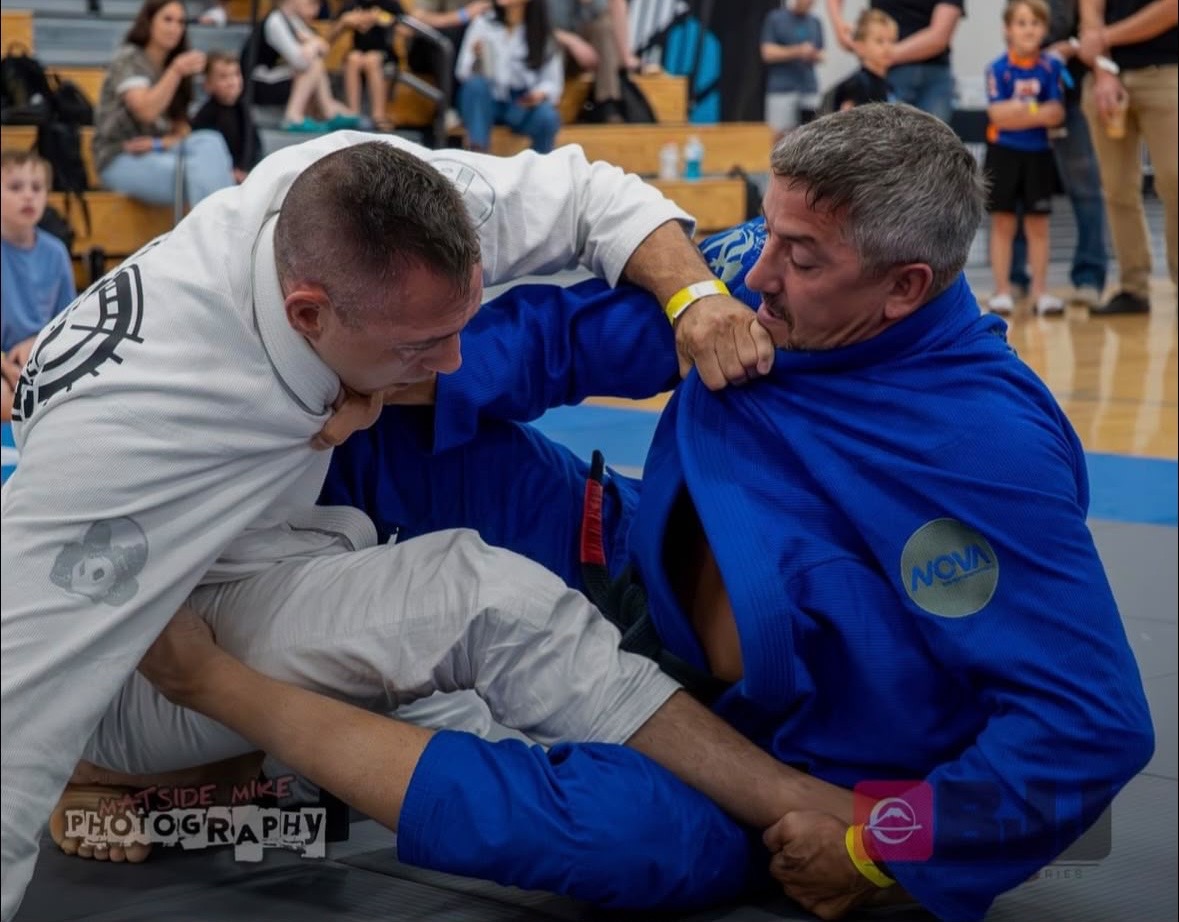
A technique may appear to fail at the end, but the breakdown usually begins earlier as each reaction removes conditions the move needs. Recognizing that sooner lets you rebuild, pivot, or solve the next problem before strength becomes the only answer.
Sometimes it seems like a technique fails all at once. One moment, everything is going according to plan. The next, you are staring at the ceiling and considering how you got there.
The more difficult failures are the techniques that almost work.
You get the grip. You create the angle. You begin the movement.
Then your training partner shifts their weight. The angle gets a little worse, so you pull harder. They start to turn, so you squeeze tighter. Your feet move out of position, but the move felt so close that you keep trying to make it work.
There are times when that extra effort is enough.
But the closer we get to finishing the technique, the more it feels like the technique failed in that final moment.
The breakdown may have started much earlier.
The breakdown begins long before the finish
Think of a chess game.
A chess player does not lose only when their king is checkmated. That is simply where the game ends. The moves leading up to it created possibilities, forced reactions, and gradually removed good choices.
If we only look at the final move, we miss everything that set it up.
Every response changes the conditions
Jiu jitsu works in a similar way. Our training partner does not simply wait for our technique to succeed or fail. They shift their weight, recover their posture, or get their hand back to the mat. Each response changes one of the conditions our technique needs.
None of those changes necessarily ends the technique. We may be able to replace the grip, recover the angle, or use their reaction to move somewhere else.
But if we are committed to the original move, we may not notice those options. We pull harder. We squeeze tighter. We move faster.
For a little while, strength may hold everything together.
Is the juice worth the squeeze?
The technique does not stop working all at once. It simply becomes more expensive.
Every lost angle costs more effort. Every weakened connection requires a tighter grip. Eventually, strength may feel like the only answer we have left.
When the roles are reversed
Now, let’s flip the situation.
Your training partner is trying to use a technique on you. You shift your weight, recover a little posture, and get your hand back to the mat. Their angle gets worse.
They can recognize that the position has changed and try something else.
Or they can squeeze harder and force the original technique.
What do you hope they do?
If you recognize what is happening, you may be perfectly happy to let them keep trying. You protect what matters, make another small adjustment, and allow them to spend more effort preserving a position that is already disappearing.
Their strength is now being spent on what was once there. Each attempt to preserve it costs more and gives them less in return.
Your strength is still available for whatever comes next.
Go where the position takes you
You may have experienced this while rolling with someone particularly good. You work harder and harder while they seem mostly curious about where you are going.
You clear one of their grips, and they replace it with another. You stop their sweep, and they use your reaction to come up. You prevent one pass, and they move to the other side.
They are not avoiding strength. They are using it to stay connected, create movement, and solve the next problem instead of trying to force a position that is already gone.
The original technique broke down.
They did not.
Don’t force a square peg into a round hole
The goal was never to prove that one particular move could solve every version of the position. The goal was to solve the position in front of us.
Sometimes that means rebuilding the original technique. Sometimes it means moving to the next one. Sometimes the reaction we created shows us an opportunity that was not available when we started.
Turn failure into information
Playful training gives us room to recognize that. We can let the position change without treating it as a personal tragedy. A failed technique becomes information instead of a final judgment.
Strength still matters. It protects us from injury, supports our structure, and helps us apply our technique.
Good technique does not make strength unnecessary.
It gives our strength somewhere useful to go.
The setup gives a technique somewhere to begin. The breakdown tells us when the conditions have changed. Between those moments, we still have choices.
Strength can help us act on any of them.
It just cannot show us an option we have stopped looking for.
See you on the mats.
Joshua is the owner and head coach at 608 Jiu Jitsu in Cross Plains, Wisconsin. He writes about learning, problem solving, and becoming a better training partner through jiu jitsu.