
Some Assembly Required
Making your instructor’s jiu jitsu work with the body you brought to class.
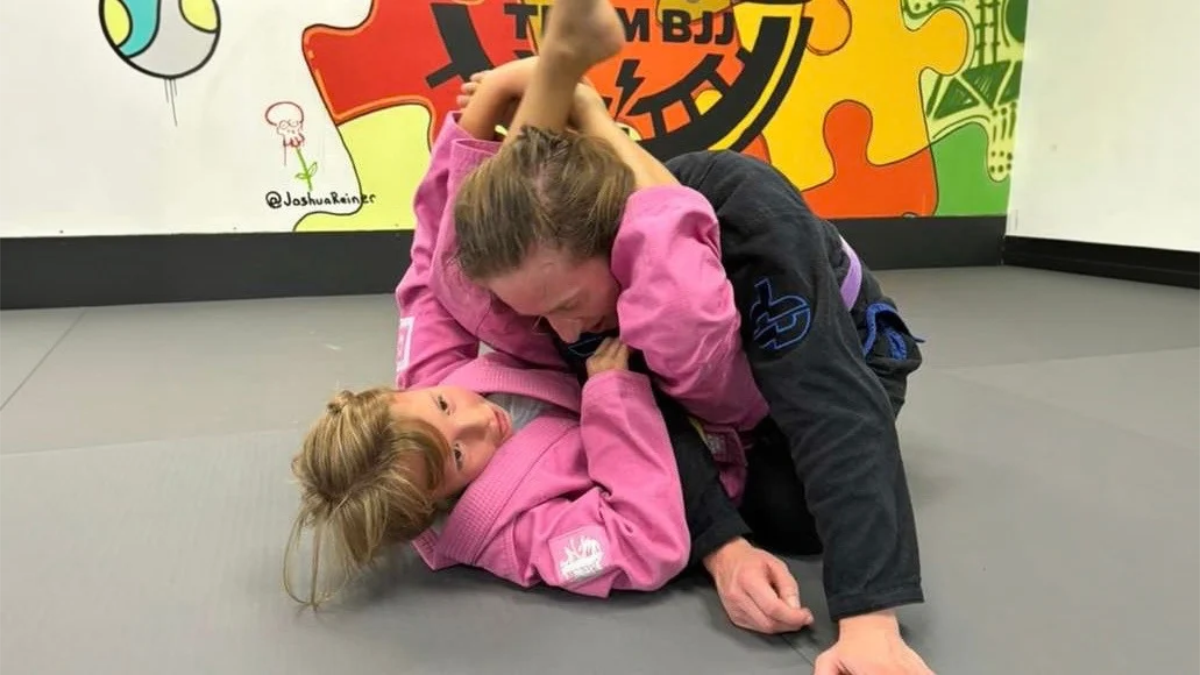
Your body and your partner’s body may call for different grips, angles, or extra adjustments. Understanding what each part of a technique accomplishes helps you find a version that works for you.
From white belt to black belt, I’ve only ever had one jiu jitsu instructor. Just one coach showing me all of his best jiu jitsu.
I’d say, and I could be biased here, that my coach is pretty darn good at jiu jitsu. And to toot my own horn, I’m okay at it too.
If you compared our jiu jitsu, you might not guess that he taught me just about everything I know. There may be a lot of reasons for that, but a not so minor one is that we just aren’t built the same. He’s a little taller than me, a lot more flexible, and more than ten years younger.
He can show me what he does. It’s a little weird that he can’t teach me how to be taller, more flexible, or younger.
When you first start learning jiu jitsu, your goal might be to do things just like your instructor does. After all, they seem to be good at everything, from every position, without question. (I’m certain my students feel this way.) So why not do it exactly the same as them?
Actual Size May Vary
Let’s go over it. Your instructor demonstrates a technique. You watch where the hands go, what the legs are doing, and how they get from one position to the next. It looks reasonable enough.
Then you try it, and for as easy as your coach made the move look, it feels much harder to do.
Maybe your knee won’t fit where theirs went. Or the grip is farther away than you expected. Could be you feel too crowded to even move a little bit without falling over.
Perhaps you need an adjustment because your body and your partner’s body create a different situation than the one you just watched.
Your instructor has had time to work through this themselves. There’s a good chance they do the move a little differently than the person who taught them. Somewhere along the way, they may have changed a grip, adjusted an angle, or found a way to move that suited them better. What you’re watching includes some of that experience.
Adjust to Fit
Now you get to work through it with the body you brought to class.
If your instructor can reach a grip from farther away, you may need to move closer before you can use it. If they can bring a leg through a space you can’t comfortably manage, you may need to change your angle or make more room first. The version that works for you might include a movement they barely seem to need.
That can change how a whole sequence looks. Where your instructor moves directly from one position to the next, you might need an extra adjustment along the way. Once you understand why you need it, that adjustment becomes part of how you do the technique.
And your partner matters, too. Something that fits together with one person may need a little rearranging with someone taller, shorter, or broader. Even your own version won’t look exactly the same every time.
This is where looking at a move as a collection of ideas can help. There’s a reason for the grip, the angle, and the movement. Understanding what they accomplish gives you something to work toward when copying the demonstration leaves you stuck.
Take the sleeve grip in a sweep. If it’s there to stop your partner from posting, that’s something your version needs to accomplish too. You may need to bring their arm closer or change your position to control it effectively. Just holding the same piece of fabric doesn’t necessarily get the same result.
Your partner won’t always fall over just because you think you’ve grabbed all the grips you were supposed to.
For Best Results
If it doesn’t work out for you right away, your instructor can help you sort through this. Sometimes they’ll correct something you missed. Sometimes they’ll show you another way to make the connection or move into position. They may even need to try it with your partner to understand what’s giving you trouble.
You can ask what a particular grip is supposed to control, or what needs to move before there’s room for your leg. Those questions give you and your instructor something specific to work on. They also help you understand which parts can change while the technique still does what it needs to do.
Some things will become easier with practice, and others may become easier because you find a better way to do them that suits you.
Over time, those adjustments can become familiar. You learn which grips you can maintain, where you need a little more space, and how you like to move between positions. What began as figuring out how to make a technique work can become part of a style that feels a little more individual and less like a mirror copy of your coach.
That’s how I think about a lot of the jiu jitsu my coach taught me. His influence is still there, even when what I do doesn't look exactly like my coach's style. I’ve spent years figuring out how to make his lessons work with my body, and somewhere along the way, that started to look like my jiu jitsu.
I’m still waiting on the lesson about being ten years younger, though. I’d show up early for that one.
See you on the mats.
Joshua is the owner and head coach at 608 Jiu Jitsu in Cross Plains, Wisconsin. He writes about learning, problem solving, and becoming a better training partner through jiu jitsu.